

Livestock
Livestock
The Extension Livestock Program provides timely resources and information to help farmers, consumers and allied industry to make informed decisions about beef cattle, poultry, sheep and goats, equine, swine, and meat science using research-based information. There are also resources for youth caring for livestock.
Livestock Educators work to:
- Collaborate with producers to identify needs and deliver research-based solutions to help them meet their goals
- Develop/maintain specific expertise related to livestock production/management
- Build trust-based relationships with various stakeholder groups
We work with:
- Partner agencies
- Campus departments
- Species-specific organizations
Upcoming Events
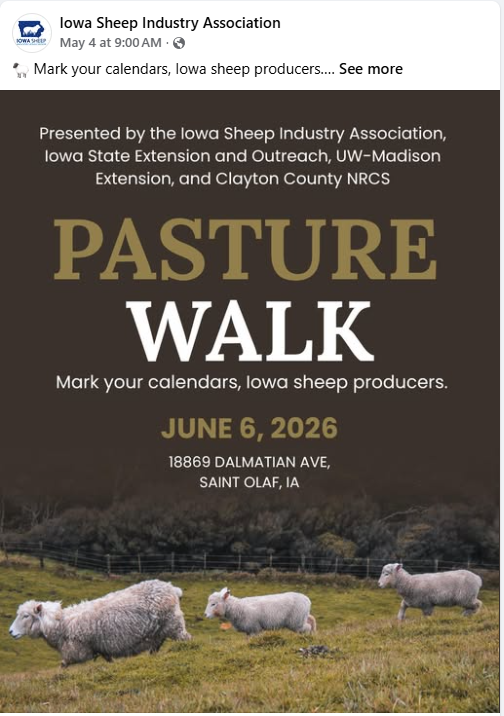
Iowa Sheep Industry Association Hosts June 6 Pasture Walk at Robert’s Creek
Date: Saturday, June 6, 2026
Time: beginning at 1:00 p.m.
Location:
Robert’s Creek, located at 18869 Dalmatian Ave, Saint Olaf, IA 52072
The Iowa Sheep Industry Association (ISIA), in collaboration with Iowa State University Extension and Outreach, UW–Madison Division of Extension, Clayton County NRCS, and NoFence Virtual Fencing (invited), will host a pasture walk and membership meeting.
This educational pasture walk will highlight the following:
- Pasture rotation using virtual fencing technology
- NRCS EQIP (Environmental Quality Incentives Program) opportunities
- Timely updates from Iowa State University Extension and Outreach
For questions, concerns, or assistance with registration, please contact:
Carolyn Ihde
📧 Email: carolyn.ihde@wisc.edu
Parasite Patrol
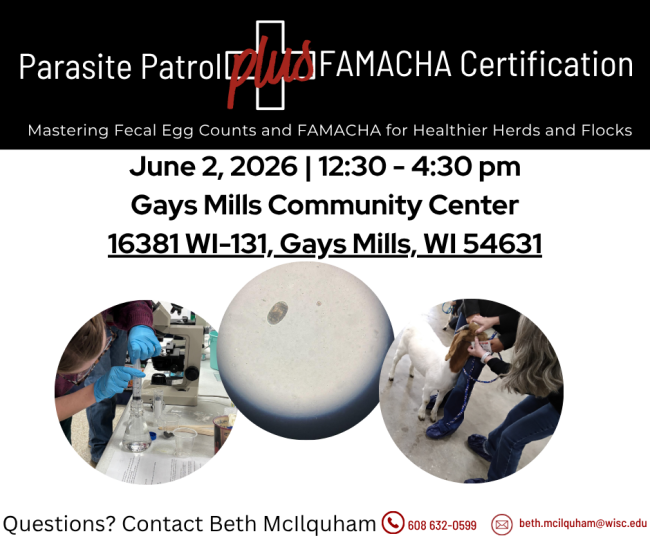
Date: June 2, 2026
Time: 12:30pm-4:30pm
Location:
Gays Mills Community Center
16381 WI-131
Gays Mills, WI 54631
Cost: $30-$60
Sheep and goat producers seeking practical tools to improve herd and flock health are invited to attend Parasite Patrol Plus FAMACHA, a hands-on educational workshop hosted by the University of Wisconsin–Madison Division of Extension on June 2, 2026, from 12:30–4:30 p.m. at the Gays Mills Community Center, 16381 WI-131, Gays Mills, WI. Topics for this event include:
- Understanding Parasite Life Cycle: Participants will learn how internal parasites develop and spread, providing the foundation for effective prevention.
- Management Strategies for Parasite Control: Educators will discuss grazing management, targeted selective treatment, and other best practices for reducing parasite pressure.
- Fecal Egg Count (FEC) Training: Attendees will discover how to use fecal egg counts as a herd health tool. Participants are encouraged to bring a fecal sample from their flock or herd for on-site examination.
- FAMACHA Certification: Extension staff will provide official FAMACHA training. Participants will complete the educational session and demonstrate proper techniques to earn certification.
Registration for the event is $30 without the FAMACHA training and $60 with the FAMACHA training. All participants have the option to take home McMaster slide for at-home fecal egg counts. For more information, including the complete agenda, fees, and registration form, visit this page to register.
Contact Beth McIlquham at beth.mcilquham@wisc.edu or 608-632-0599 with any question Extension Office.
Recent News & Articles
Shearing Day Preparation and 2026 Sheep Shearers Directory
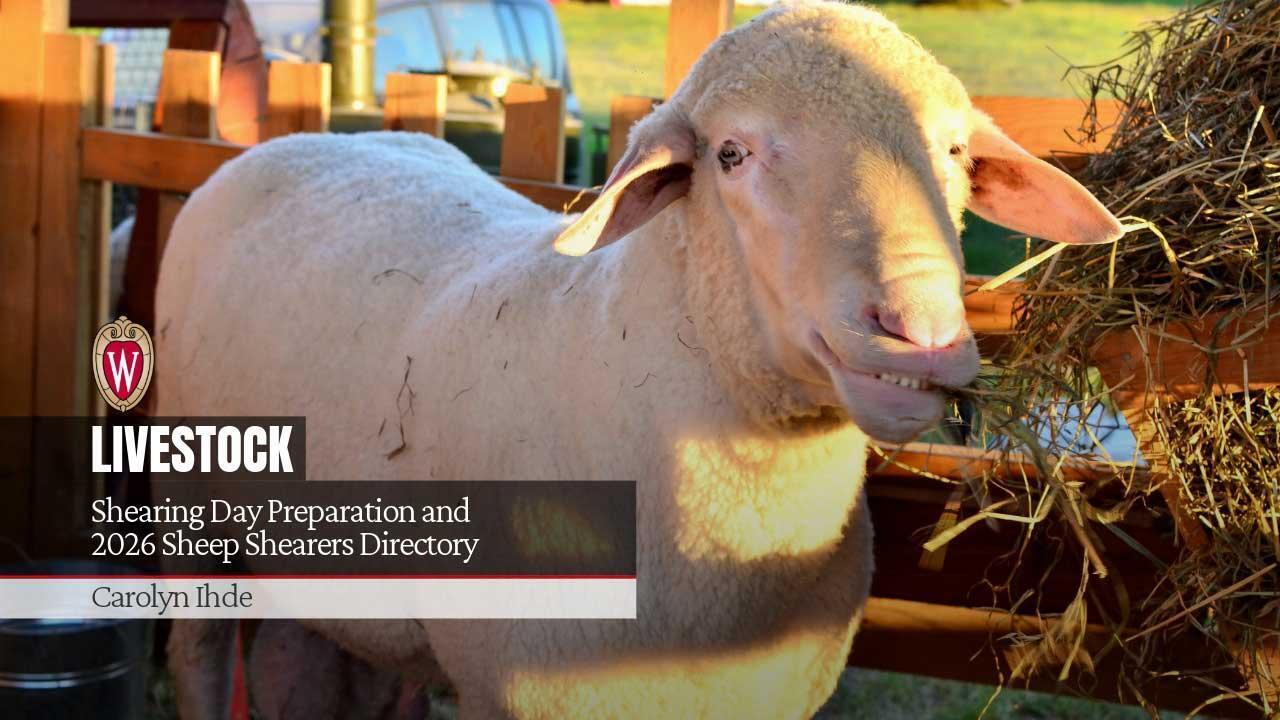
As professional shearers become fewer and schedules fill quickly, Wisconsin producers are encouraged to reach out several weeks to a couple of months ahead of their intended shearing date to ensure the shearer can fit the flock into the route and that the schedule works for both parties.
Asian Longhorned Tick Video
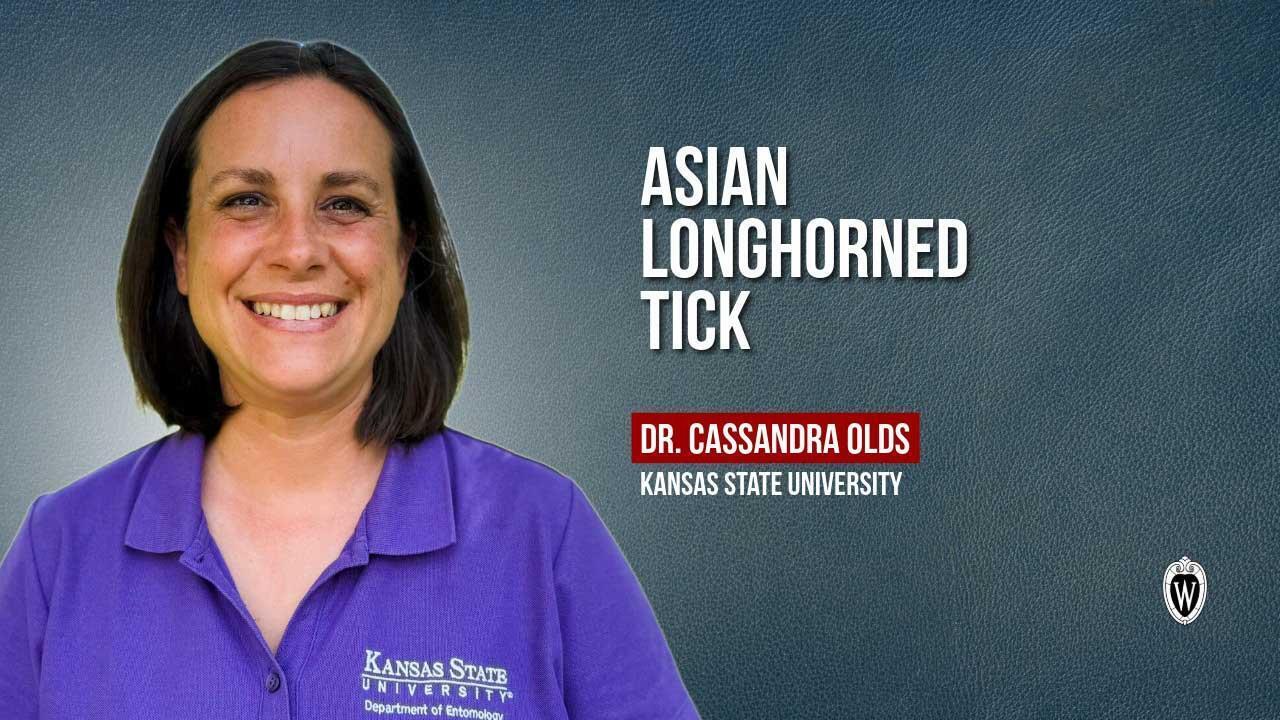
Dr. Cassandra Olds, Kansas State Entomologist shares information about the Asian Longhorned Tick and Theileriosis, their potential impact on cattle in Wisconsin, prevention and treatment options, what Wisconsin beef producers can do now, and what to expect next.
Livestock Risk Protection
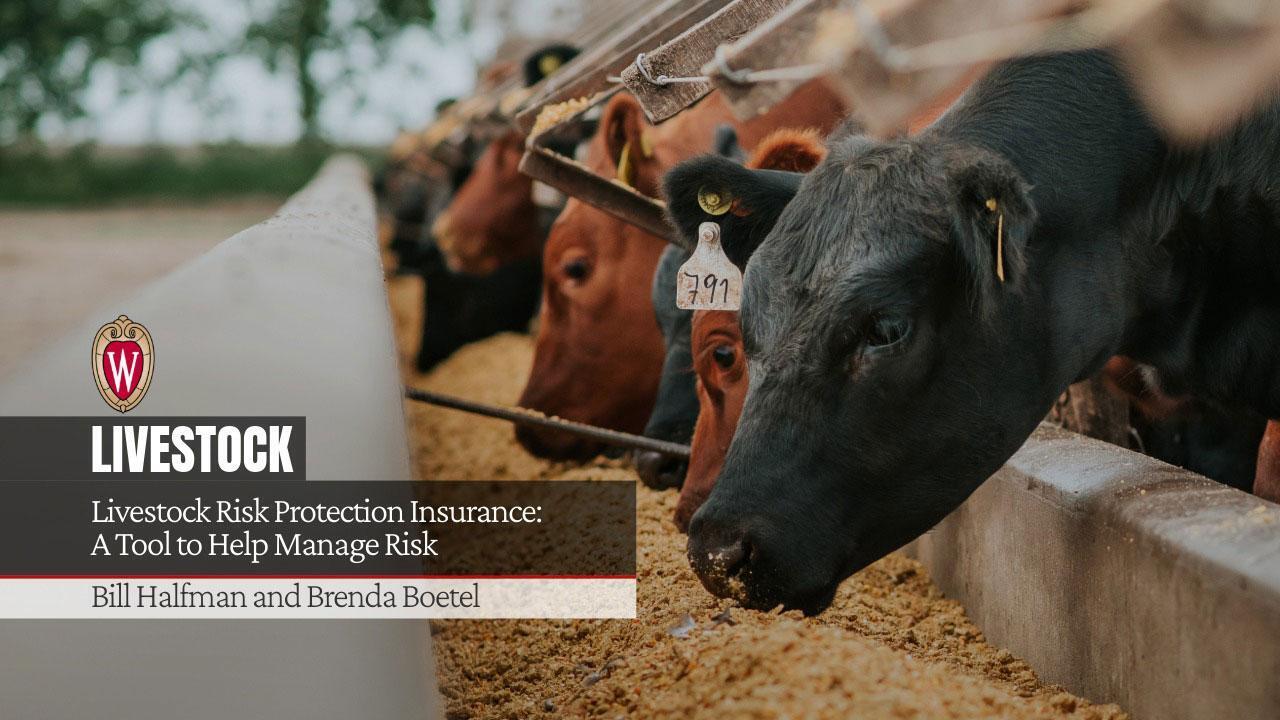
Feeder calf and fed cattle prices are currently high, and so are the input costs to raise them. Beef producers are taking on a lot of risk. To help mitigate that price risk, beef producers can look at using Livestock Risk Protection Insurance (LRP) to protect against unforeseen price drops.
Visit the Livestock Topic Hub for more information.
Latest News in Livestock
- Hands-on training and FAMACHA certification for sheep and goat producers.
- Spring 2026 cattle feeder projections outline expected costs, sale prices, and margins using regional averages; producers should apply their own data for accurate decisions.
- Pasture walk June 6 in Saint Olaf featuring virtual fencing, NRCS EQIP info, Extension updates; registration required; biosecurity, parking limits, and weather‑dependent schedule.
- A tick species new to the U.S. is spreading fast — and Wisconsin livestock producers need to know about it. The Asian longhorned tick has already been found in Michigan, Illinois, and Iowa. One female can lay up to 3,000 eggs, and thousands of ticks can feed on a single animal at once. Learn what […]
- This workshop and its two hands-on sessions focus on managing the health and production risks posed by intestinal parasites (helminths) to flocks and herds.
Staff
If you have any questions regarding Livestock in Vernon County, please contact:
Regional Livestock Educator, Beth McIlquham

Serving Crawford, La Crosse, Richland, and Vernon Counties
Contact: 608-632-0599
Email: beth.mcilquham@wisc.edu
Beth McIlquham serves as Regional Livestock Educator to Crawford, La Crosse, Richland, and Vernon Counties. She works with livestock/dairy producers and agribusiness professionals to solve production challenges and incorporate new research findings into outreach/educational materials to improve production, profitability, and efficiency.
She graduated from the University of Wisconsin-River Falls earning a Bachelor of Science degree in Animal Science with an emphasis on meat animals. Previously, she worked for Extension as educational support for Pierce County’s 4-H program, as well as with the Humane Handling Institute. At Pierce County, she built valuable relationships with families and volunteers in addition to executing various programs. Within the Humane Handling Institute, she assisted in putting on workshops for slaughterhouse employees. There, she had the opportunity to learn about humane handling techniques within cattle, swine, goats, and sheep, as well as the importance of captive bolt maintenance.
Beth’s main focus is on beef cattle production. She is grateful to be a part of the team in Crawford, La Crosse, Richland, and Vernon counties and looks forward to meeting livestock industry players in the area.